
Dining Table Size Guide: How to Choose the Right Table for 4, 6 or 8 Chairs
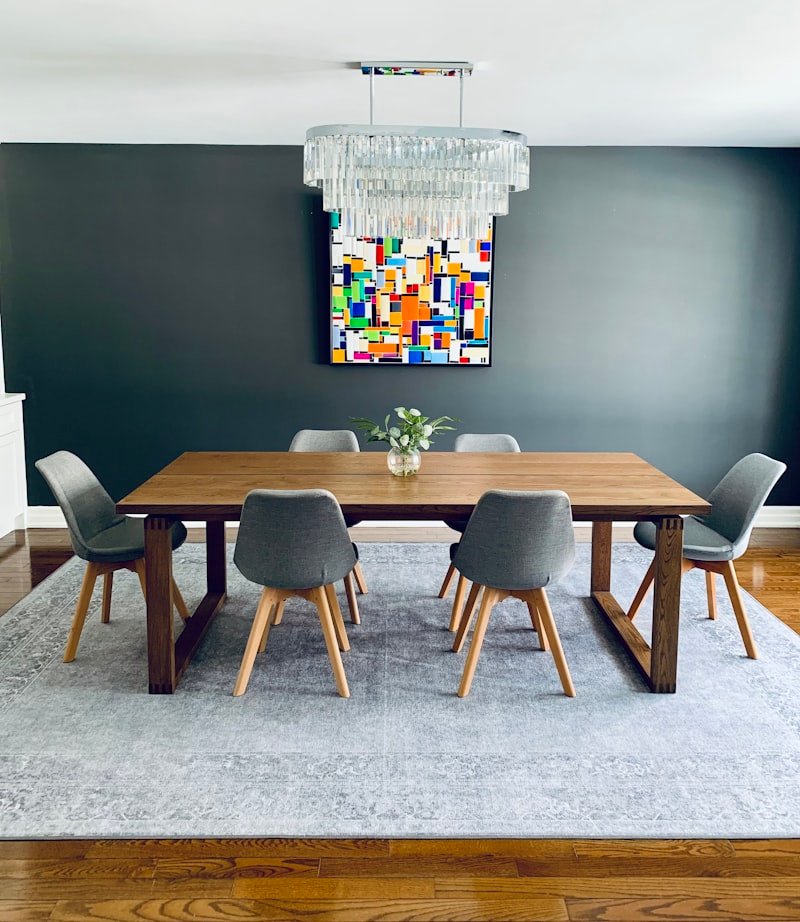
For 4 chairs, choose a table 120 to 150 cm long; for 6 chairs, 150 to 200 cm; for 8 chairs, 200 to 250 cm. Give each diner about 60 cm of table width and leave 90 cm between the table edge and the wall so chairs pull out comfortably. Rectangular tables seat more people per centimetre; round tables suit square rooms and livelier conversation. The charts and measuring walkthrough below turn those rules into an exact size for your dining room.
The 60 cm rule
Every diner needs roughly 60 cm of width along the table edge and 35 to 40 cm of depth for their place setting. This is the simple math behind every dimension chart you will ever see — a 180 cm table seats six because 180 divided by 60 is three per side. Elbow room is not a luxury; it is what makes a dinner feel relaxed instead of cramped. When in doubt, round up your width per person rather than down.
Table dimensions by seat count
| Seats | Rectangular (length × width) | Round (diameter) | Minimum room size |
|---|---|---|---|
| 4 | 120–150 × 75–90 cm | 105–120 cm | 300 × 300 cm |
| 6 | 150–200 × 90–100 cm | 135–150 cm | 360 × 300 cm |
| 8 | 200–250 × 100–110 cm | 165–180 cm | 420 × 360 cm |
Our oak dining table for 6 sits right in the middle of the six-seat range — a useful reference point when you compare any other table. Width matters too: under 75 cm and serving dishes have nowhere to live; over 110 cm and passing food across becomes a stretch.
Clearance: the 90 cm rule
Measure from the table edge — not the chair — to the nearest wall or furniture. Ninety centimetres lets a diner push back and stand up comfortably; 120 cm lets someone walk behind a seated guest without the awkward sideways shuffle. In open-plan spaces, use a rug to mark the dining zone: the rug should extend at least 60 cm beyond the table on all sides so chairs stay on it when pulled out.
Round vs rectangular: which suits your room?
Round tables shine in square rooms and bay windows. Everyone faces each other, there are no corners for kids to bump into, and a 120 cm round seats four as comfortably as a rectangular table with twice its visual weight. The trade-off is scalability — round tables do not extend gracefully.
Rectangular tables seat more people per centimetre of length, accept extension leaves for holidays, and suit the long, narrow dining rooms common in Toronto semis and townhouses. If you host big family dinners twice a year and eat as four the rest of the time, an extendable rectangular table is the pragmatic answer.
Extension tables and leaves
If you host big dinners twice a year and eat as four the rest of the time, an extendable table is the pragmatic answer — but buy for the size you use daily, not the size you dream about. Check how the leaves store: self-storing butterfly leaves live inside the table and deploy in seconds, while separate leaves need closet space you may not have. Also test the extension mechanism for wobble — a table that seats eight unstably is worse than one that seats six solidly. As a rule of thumb, each 60 cm of added length seats two more people, which is why most extendables jump from four to six or six to eight.
Measure your room in five minutes
- Mark the table footprint on the floor with painter's tape.
- Measure 90 cm out from each edge — that is your chair zone.
- Walk the zone: can you pull a chair out and stand up without hitting anything?
- Check the delivery path: doorways, stair turns and elevator dimensions.
- If the room falls between sizes, size the table down — a roomy four beats a cramped six every time.
Small dining rooms and condos
In compact spaces, lighter woods and glass tops visually open the room, and a bench on one side tucks fully under the table when not in use. Drop-leaf and extendable tables are the classic condo solution: daily seating for four, holiday seating for eight. And if your room needs something no catalogue offers, our custom-build service designs tables to your exact dimensions — unusual rooms are literally what it is for.
Wall-mounted drop-leaf tables are the extreme space-savers: folded down they are a console barely 30 cm deep, opened up they seat four. Pair one with stackable chairs and even a studio dining corner works surprisingly well.
Buy the size your room allows, not the size your guest list imagines. A well-proportioned table you use every day beats an oversized one you squeeze around. Compare real dimensions on our oak 6-seater dining table, browse kitchen and dining storage to complete the room, or ask us — we help customers measure rooms every week.
Frequently Asked Questions
Choose a rug that extends at least 60 cm beyond the table on every side, so chairs stay on the rug when pulled out. For a 180 × 90 cm table, that means roughly a 300 × 210 cm rug.